
- Non classé
- Comment (0)

The Takeoff of a New Generation of Pilots from Tunisia
By integrating The Aviator Institute (TAI) into the Airbus Flight Academy network, the European aircraft manufacturer recognizes a training model aligned with its most demanding standards.
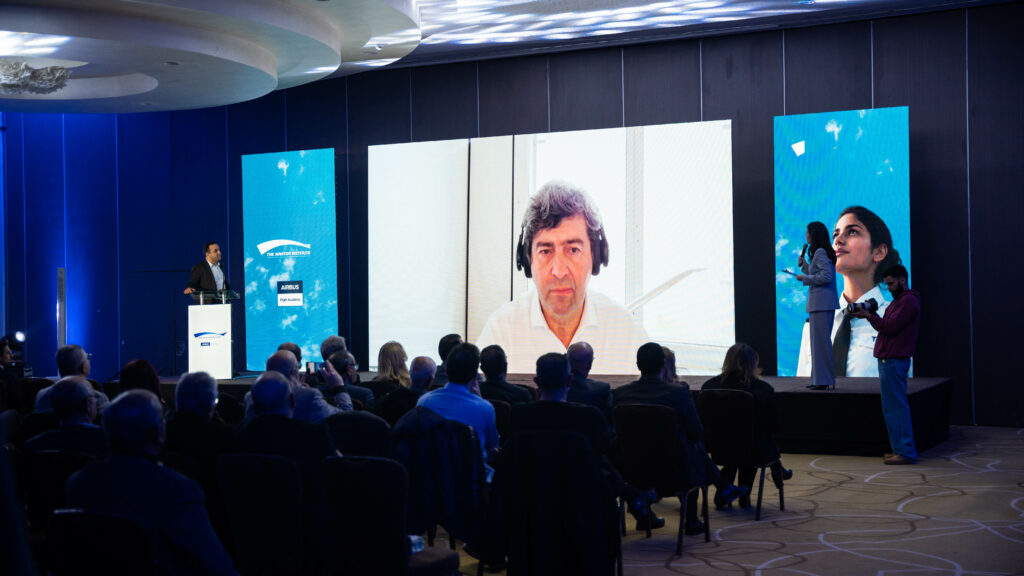
Tunis, January 28, 2026 – In the presence of national and international media, representatives of public authorities and the aviation sector, as well as key partners such as Airbus, Nouvelair and Tunisair, The Aviator Institute (TAI) presented today in Tunis, during its press conference, its training programs and strategic partnerships, reaffirming its role as a leading aviation academy in Africa and the Middle East.
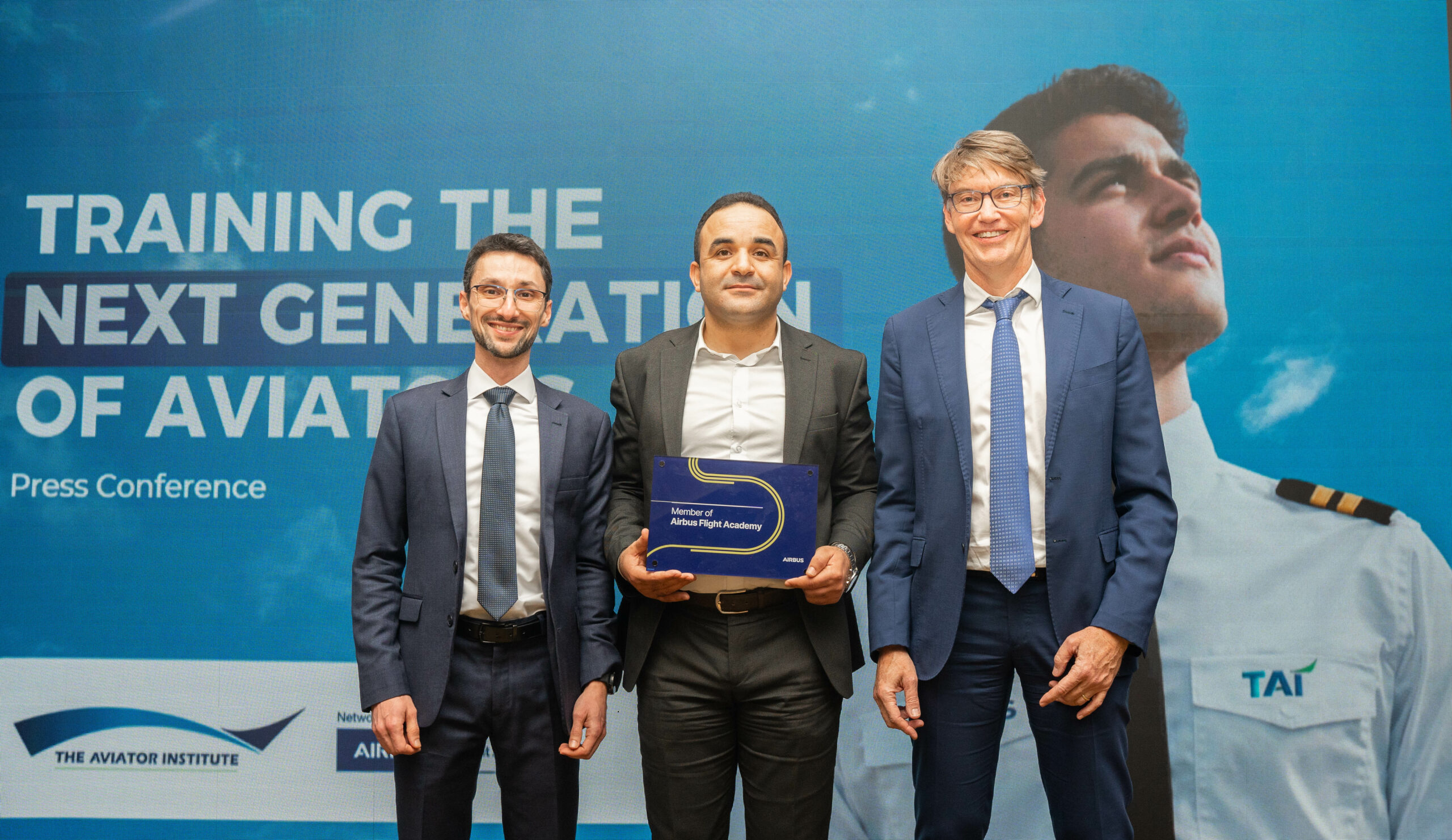
Within this framework, the integration of The Aviator Institute into the Airbus Flight Academy network represents a strong international recognition: the European aircraft manufacturer is supporting a training model aligned with its most rigorous standards. This structuring milestone confirms TAI’s positioning as a leading academic player and is part of a sustainable growth dynamic for aviation training from Tunisia.
The event provided an opportunity to present the Institute’s vision, training programs and strategic partnerships, illustrating a clear ambition: to sustainably structure aviation training from Tunisia.
An Academy Rooted in Tunisia’s Aviation History
The conference first recalled the historical, institutional and human context in which The Aviator Institute operates. Founded in 2010 under the name Safe Flight Academy, at the initiative of TTS Group, Tunisia’s leading private aviation group, and developed with the support of industry experts and Brookfield Aviation, the academy was built around a constant requirement: bringing training closer to the operational realities of modern aviation.
In 2016, Avico Group joined TAI’s shareholding structure as a strategic investor, with the objective of supporting and accelerating its development plan. Founded in 1996, Avico Group provides services across the entire air transport ecosystem: construction, asset management, training, airworthiness, flight and ground operations.
More than an announcement, this address sent a strong signal. Training aviation professionals is no longer about accumulating flight hours, but about preparing careers, responsibilities and critical decision-making at the heart of a global aviation system.
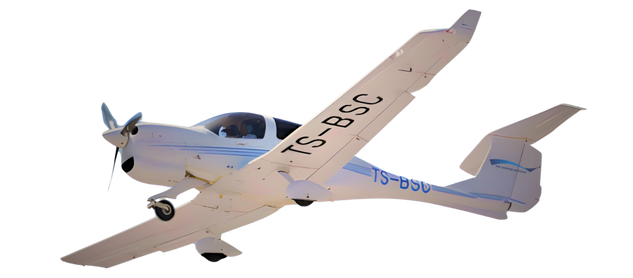
With fifteen years of experience, TAI now relies on a next-generation fleet, advanced flight simulators, an experienced instructional team and a unique offering in the Tunisian market, providing access to dual Tunisian and European certification. The Institute welcomes students from several continents, reflecting its already resolutely international positioning.
“We are proud to contribute to the development of The Aviator Institute, which for more than ten years has been training pilots from three continents with the utmost rigor and according to the highest standards. Joining the Airbus Flight Academy network is a very important step for the Institute: it is recognition of its level of excellence and a unique opportunity to accelerate its development,”
said Gilles Gompertz, CEO of Avico Group.
From Safe Flight Academy to The Aviator Institute: A New Scale
After welcoming Avico Group into its shareholding five years ago and becoming The Aviator Institute, the school has not renounced its identity—it has scaled up. This rebranding, combined with recognition by the world’s leading aircraft manufacturer, marks a profound transformation and reflects the ambition to be part of a long-term vision built on academic excellence, safety and alignment with international standards.
Far from being merely symbolic, this evolution accompanies the expansion and deepening of the aviation training programs offered by the Institute—from piloting to maintenance, from flight operations to airworthiness management—while maintaining the same requirements of quality, rigor and standardization. It also integrates an approach to sustainability, both environmental and human, and clearly affirms a goal: to structure, from Tunisia, a credible aviation industry on a global scale.
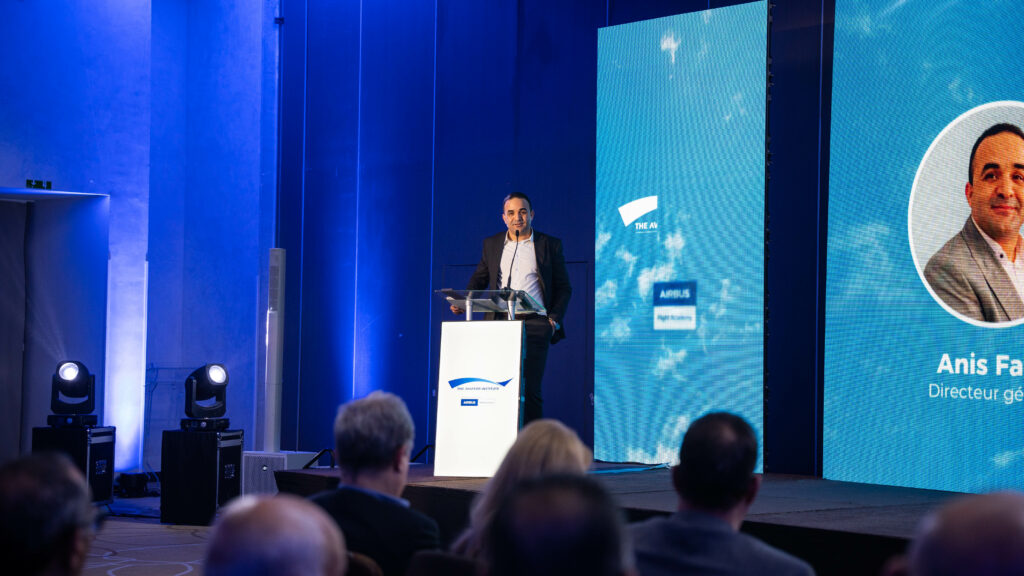
“Our ambition is to make Tunisia an international hub for aviation training, by deploying the most modern, integrated and secure resources and teaching methods,”
emphasizes Anis Faidi, CEO of The Aviator Institute, who also highlighted the importance of regulatory adaptation and the support of local authorities in fostering an ecosystem conducive to the emergence of this national ambition.
Pilot Cadet Program: Preparing Tomorrow’s Airline Pilots
“We are convinced that by strengthening local aviation training capabilities, Tunisia will not only be able to meet regional and international market needs, but also create new employment opportunities and contribute to the country’s influence in a high value-added sector,”
stated Chokri Zarrad, CEO of Nouvelair, expressing the vision underpinning this program defined by the airline in close collaboration with The Aviator Institute.
Developed in close partnership with Nouvelair, the Nouvelair Pilot Cadet Program offers a structured and demanding pathway toward a career as an airline pilot. It combines in-depth theoretical training, simulator sessions and flight hours supervised by experienced instructors, in order to prepare highly qualified pilots fully aligned with commercial aviation standards.
As a training partner, Nouvelair enables students to evolve in contact with a modern fleet and to benefit from the expertise of air transport professionals, fostering concrete immersion in the operational environment of airlines.
Through this program, The Aviator Institute places its training capabilities at the service of both airlines and young people aspiring to become pilots.
Training Aviation as a System: Maintenance and Safety
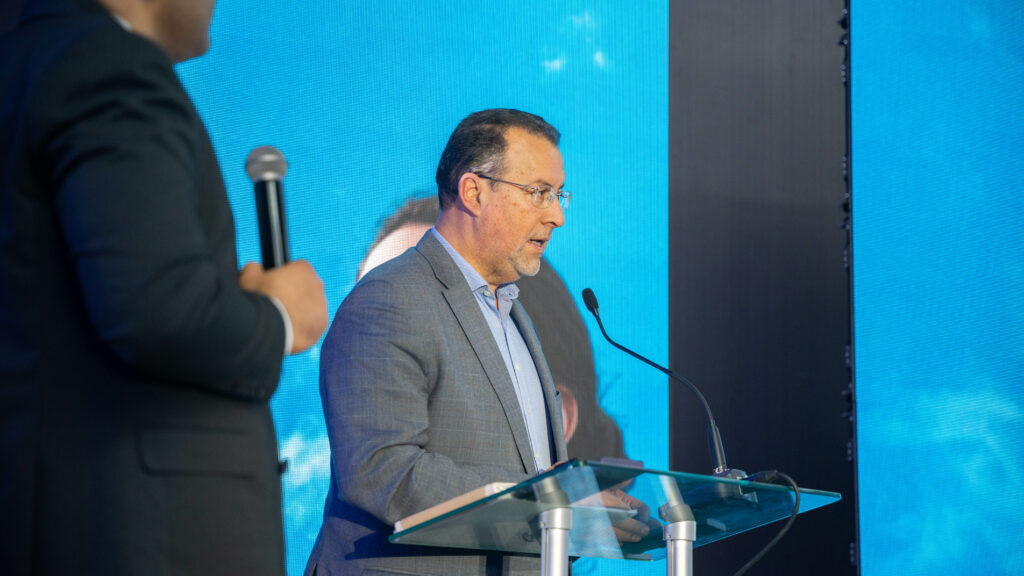
TAI claims a comprehensive and responsible approach to aviation training.
This vision is notably reflected in the announced launch of Part-147 (B1 and B2) approved training programs in aircraft maintenance, accredited by both Tunisian authorities and the European Union Aviation Safety Agency (EASA), scheduled for the end of 2026. This initiative is based on a strong conviction: aviation safety is not ensured solely in the cockpit. It is also built on the ground—through technical expertise, procedural rigor, precision of actions and the collective responsibility of the entire aviation value chain.
Aligned with the most stringent standards of the global industry, these programs aim to develop immediately operational skills, provide clear professional career paths and meet real market needs, while strengthening the employability of young graduates in Tunisia and internationally in high-expertise professions with sustainable career prospects.
Monastir: A Cornerstone of the Academic Project
At the heart of this strategy lies Monastir. All of TAI’s training activities will be progressively centralized at Monastir Habib Bourguiba International Airport, positioning the city as a strategic aviation training hub for Tunisia, Africa and the Middle East. This choice is based on the quality of aviation infrastructure and weather conditions, the coherence of training flows and the desire to create a clear, efficient and international academic environment on a high-performance, non-saturated aviation platform.
The project includes the development of modern infrastructure comprising maintenance hangars, workshops and laboratories dedicated to Part-147 training, as well as operational and administrative facilities. It represents a total investment of over 15 million Tunisian dinars. Within this dynamic, TAI plans to train between 80 and 120 student pilots per year in the coming years and to strengthen its training fleet, notably through the acquisition of new aircraft. This centralization is part of a responsible approach, without social disruption, but with progressive growth that creates value for the region.
A Strategic Partnership with Airbus Flight Academy
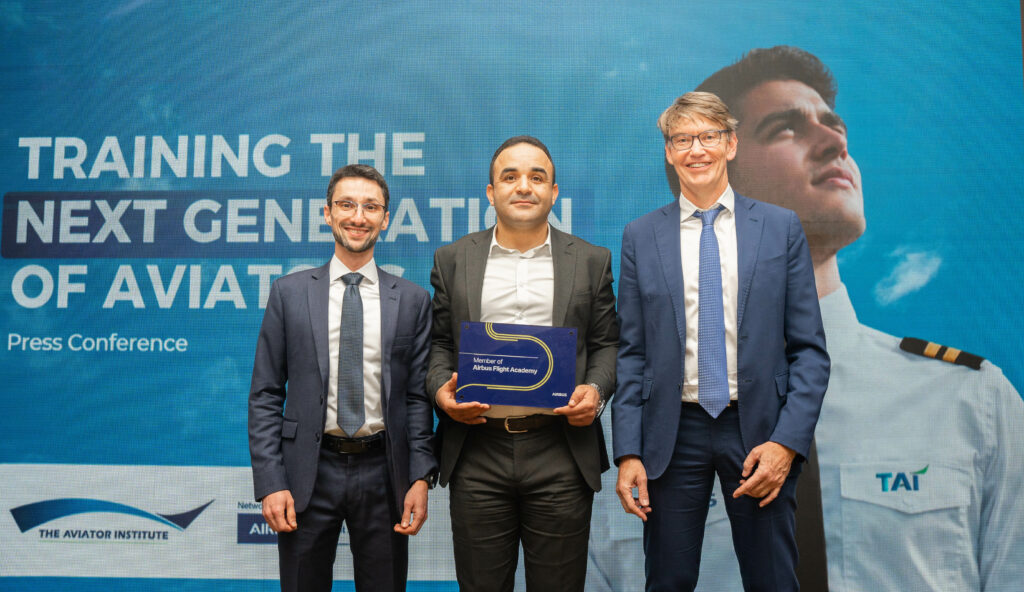
By joining the global Airbus Flight Academy network, The Aviator Institute adheres to a framework of training excellence that meets international requirements, aimed at training pilots who are ready to operate and meet the challenges of tomorrow.
This integration involves adopting Airbus’s highest training standards and innovative competency-based pedagogical methods (notably CBTA – Competency-Based Training and Assessment), from the initial selection of trainee pilots through to their operational readiness within airline environments.
Leveraging Airbus’s expertise and support, The Aviator Institute benefits from direct assistance in standardizing all its operations—from pedagogical excellence and instructor training to infrastructure quality.
Commitment to a Strong Safety Culture
The Aviator Institute also reaffirms its commitment to a strong, shared safety culture aligned with international ICAO standards. Beyond the implementation of the most rigorous technical standards, the Institute promotes a Just Culture approach—non-punitive, encouraging reporting, continuous learning and incident prevention. By addressing global needs for qualified human resources, TAI plays a structuring role in the aviation safety chain and directly contributes to airline operational safety through rigorous, standardized, competency-based training.
Through this strategic milestone, The Aviator Institute clearly affirms its role: to further professionalize, enhance safety and project Tunisian aviation training onto the international stage, actively contributing to Tunisia’s visibility as a regional reference hub for aviation training.
About The Aviator Institute (TAI)
Founded in 2010, The Aviator Institute, formerly Safe Flight Academy, is a Tunisian aviation academy dedicated to training pilots, aircraft maintenance technicians and engineers according to international standards, in partnership with Airbus and regional airlines.
TAI is currently the only academy in Tunisia offering dual Tunisian and European (EASA) certification, providing its graduates with both local and international recognition. It is also a member of the Airbus Flight Academy network, strengthening its positioning within an international ecosystem of aviation training excellence.